
The “Cataratas Day”, an event that celebrated the 15 years since the Iguazu Falls were recognized as one of the New 7 Wonders of Nature in the World, was celebrated with various activities in the Brazilian Park (owners of 20% of the Iguazu Falls) and in the Argentine Park (80%).
The inauguration of a Magic Portal brought visitors from both countries closer, allowing them to interact from both sides of the border, living an unforgettable experience in the Iguazu Falls. The initiative highlighted the binational character of this natural heritage, which unites both countries through one of the most extraordinary landscapes on the planet.
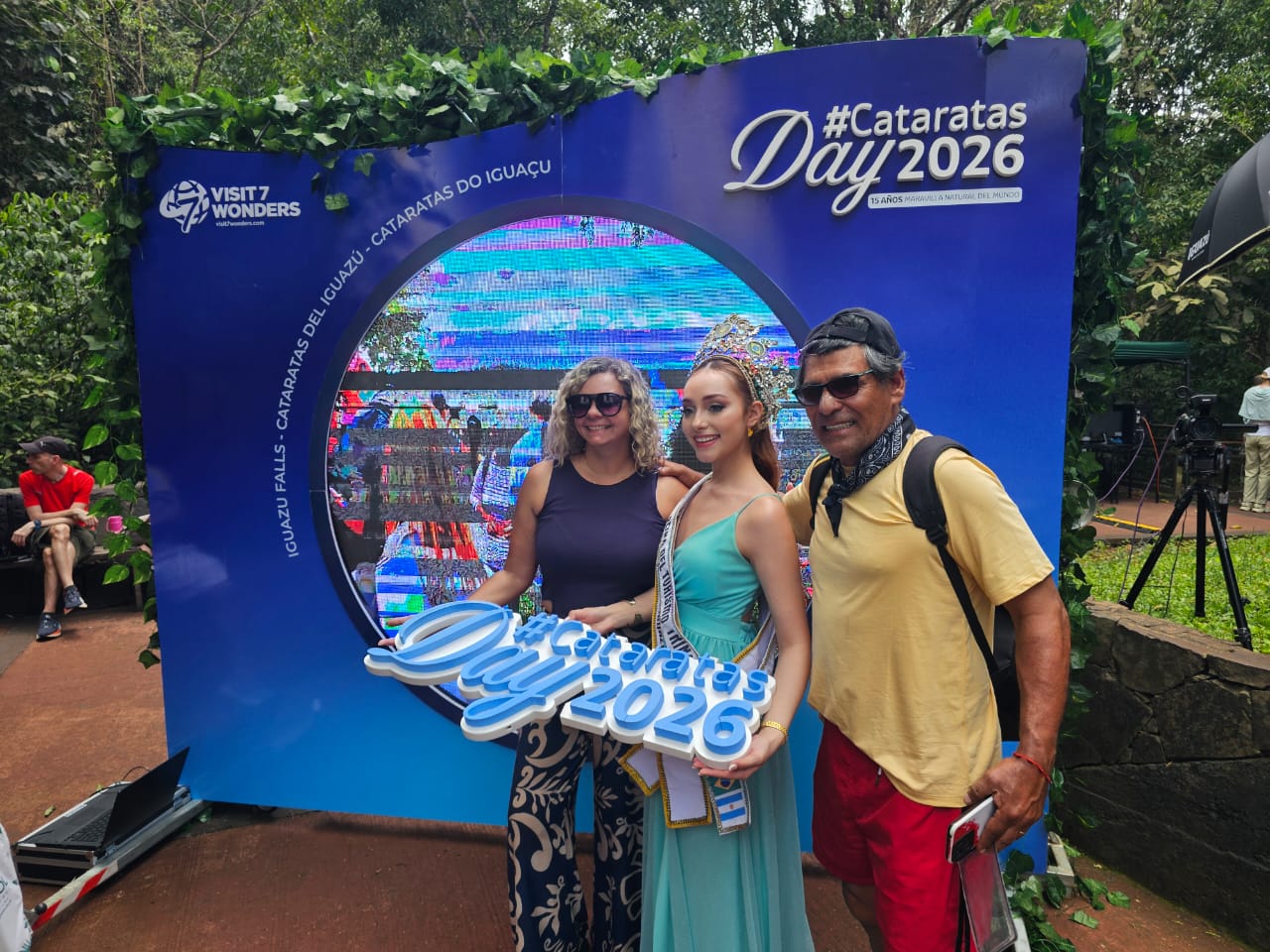
The day in the Iguazú National Park (Argentina) included music, regional dances and activities for tourists. There were spaces to be photographed with the official mascots of Cataratas Day, with a special invitation to share the images on social networks and join the celebration.
The closing of the official celebration took place at 6 pm at the Iguazú Grand Hotel, where an institutional act and a commemorative cocktail was held for the 15th anniversary of the Iguazú Falls as one of the New 7 Wonders of Nature in the World.
Within the framework of Cataratas Day, Carol Da Rosa – general manager of Iguazú Argentina (company related to services in the Cataratas area) – pointed out that sustainability and preservation are central criteria in the daily work of the concessionaire. And he highlighted that the anniversary also represents a renewal of the commitment to continue working to protect one of the most important natural heritages in Argentina and the world.
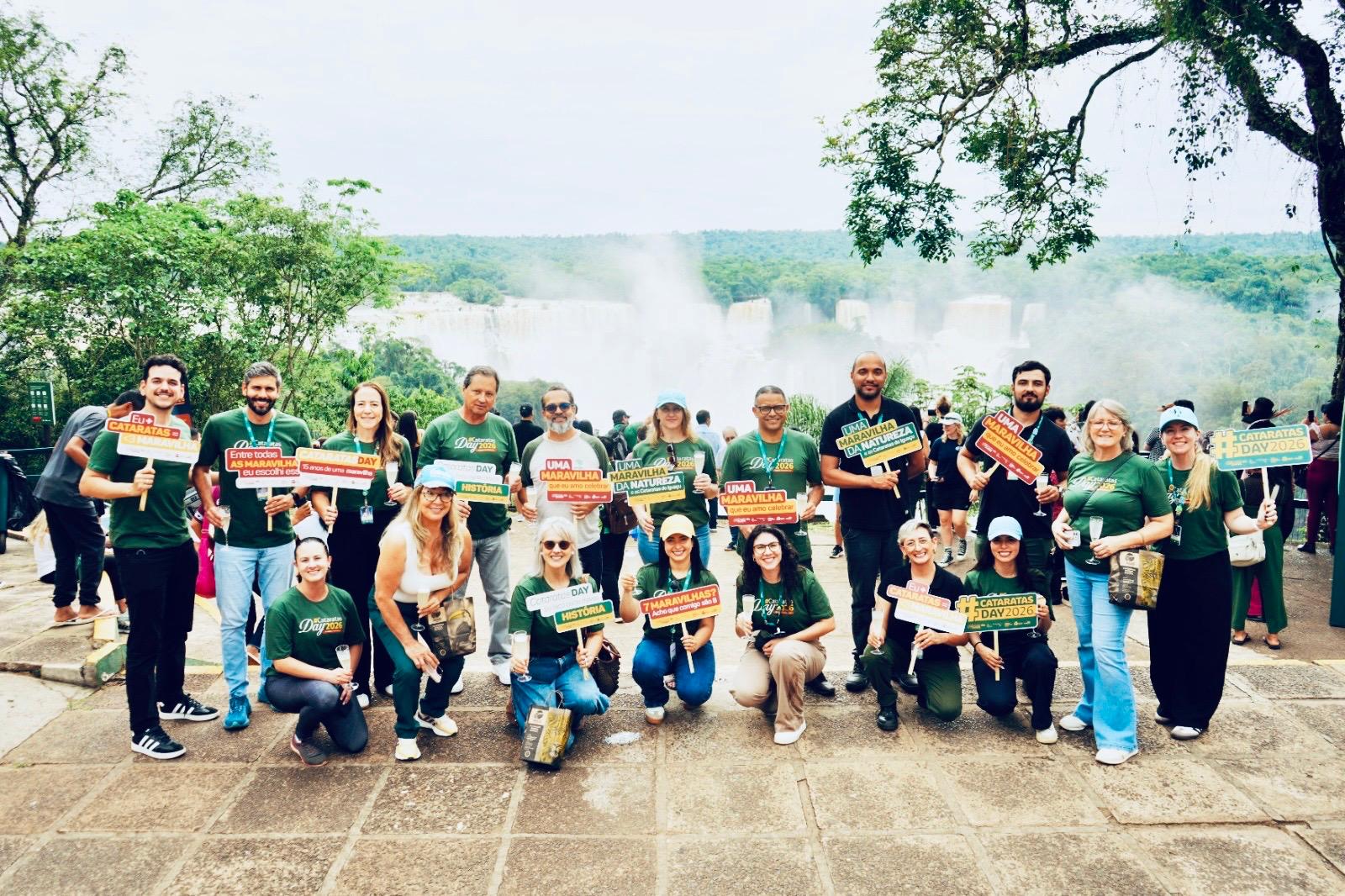
The Park of Brasil, offered free admission that Wednesday, November 11, for residents of the 14 municipalities that surround the nature reserve that houses the Iguazú Falls. The day’s program included photo booths at the main viewpoints along the trail. In addition, a job fair was organized at the Visitor Center, the Human Resources team of Urbia + Cataratas presented the job offers and registered more than 300 interested parties. At the same time, a small market was developed with 20 local producers, encouraging the meeting between visitors and entrepreneurs from the region.
There were also yoga classes, and the real-time connection with Argentina through the Magic Portal, and people could also enjoy an open walkway with an impressive flow of water, which attracted 6,000 people on Wednesday, November 11 alone.
“The title of Natural Wonder of the World has consolidated the Iguazu Falls as one of the main natural attractions of the planet, expanding the presence of foreign tourists and maintaining a constant flow of visitors during these 15 years. And in addition, it has reinforced the importance of preserving this natural heritage,” said Mario Macedo Junior, CEO of Urbia+Cataratas, a concessionaire of the services of the Brazilian Park.
A “Wonder” of growth
The Iguazú National Park (Argentina) received its first millionaire visitor on December 19, 2007, the year in which the world voting campaign began. From then until 2026, visits grew by more than 50%, with a pre-pandemic maximum of 1,635,237 admissions in 2019. After closing 2025 with 1,532,230 visitors, in 2026 it reached one million in August and exceeded 1.2 million in November, despite the river floods associated with the El Niño phenomenon.
This performance responds to continuous promotion and international positioning, with 40% of foreign tourists from Mercosur – mainly Brazil and Paraguay, in addition to travelers from America and a record growth from Europe, led by Spain, France and Germany. In addition, in Puerto Iguazú, the hotel offer went from some 9,784 places in 2008 to more than 15,000 today (an increase close to 53%), accompanied by new gastronomic proposals and tourist attractions, according to Leopoldo Lucas, president of Iturem.
For its part, the Iguaçu National Park (Brazil) went from 1,154,046 visitors in 2008 to a historical record of 2,058,539 in 2025, which is equivalent to an increase of more than 78%. In 2026 it exceeded one million incomes in the middle of the year and recorded its best historical July with more than 263,000 visits. Although it receives travelers from Europe, the United States and Canada, the largest volume comes from the Brazilian market itself, a large number taking into account that the country has more than 214 million inhabitants.
As for the hotel industry, according to the regional hotel union (Sindhotéis), the local offer went from about 20,000 active places in 2008 to between 27,000 and 29,000 today (more than 38% growth), driven by investments in urban resorts and executive hotels.
Thus, both countries closed the 15 years of recognition with positive balances in visits and infrastructure, and with the clear commitment to continue working to preserve one of the most impactful natural heritage on the planet.